
Biography
The career of Tennessee Williams (1911-1983) spanned six decades, earning him an international reputation as one of America’s greatest playwrights. An unusually prolific artist, Williams’s body of work includes poetry, short stories, novels, essays, paintings, and a memoir, although he is best known for his success in the theatre. Williams began writing full-length plays during the Great Depression, with titles such as Candles to the Sun (1937), Spring Storm (1938), and Not About Nightingales (1938), and achieved the height of popular and critical success in the postwar climate of the 1940s and ’50s. He rose to fame in 1945 with his first Broadway success, The Glass Menagerie, followed by the Pulitzer Prize-winning hits A Streetcar Named Desire (1947) and Cat on a Hot Tin Roof (1955), along with other well-known titles such as Summer and Smoke (1948), The Rose Tattoo (1950), Suddenly Last Summer (1958), Sweet Bird of Youth (1959), and The Night of the Iguana (1961), which were all made into star-studded Hollywood films.
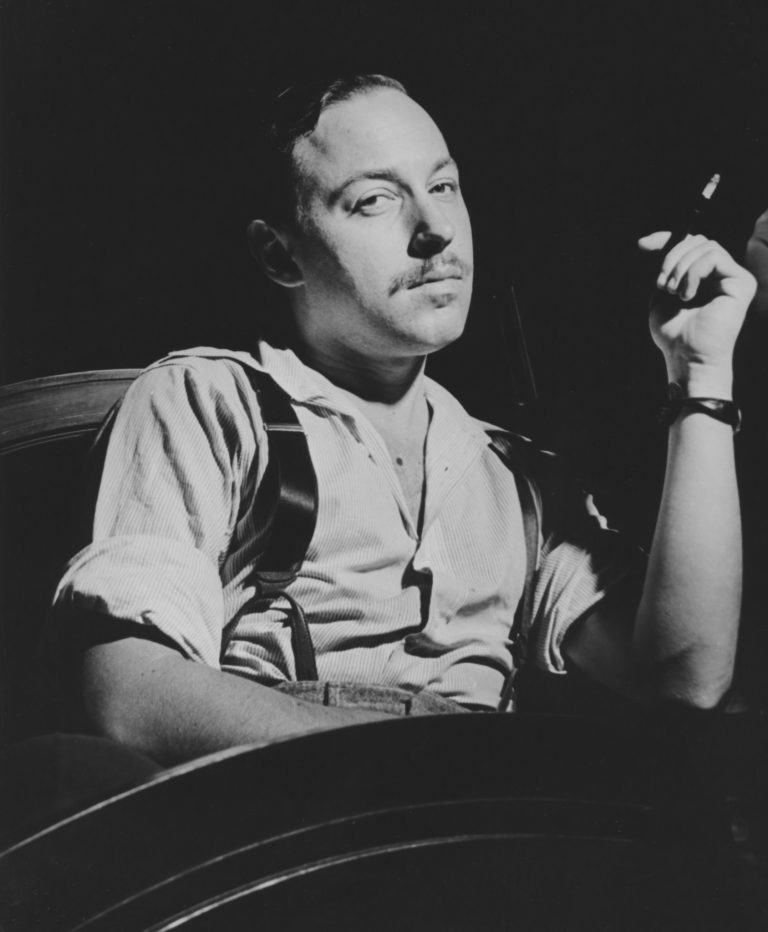
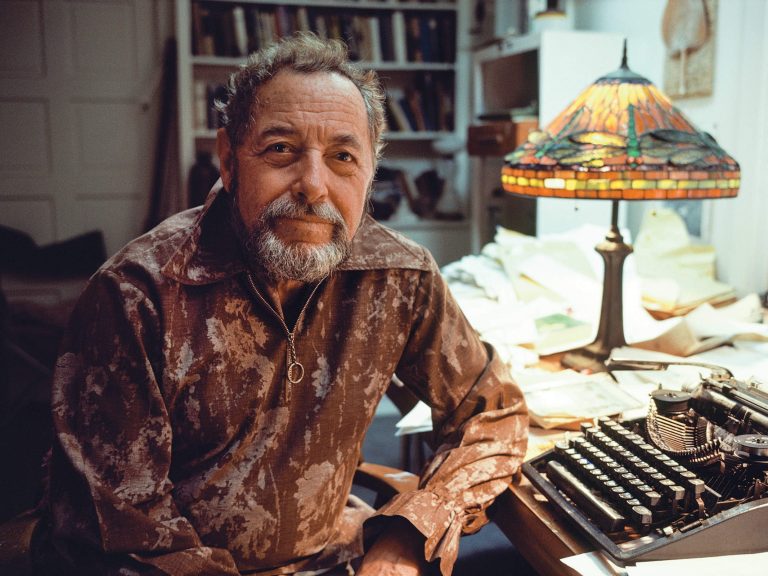
Williams continued to write plays throughout the 1960s, ’70s, and ’80s, as he embraced new themes and dramatic styles that reflected the cultural shifts of these dynamic decades, despite his declining popularity and pressure from a critical establishment that often resisted his expanding artistic vision. Since the 1990s, however, the re-evaluation of Williams’s later work and reputation has led to more informed productions of plays such as The Milk Train Doesn’t Stop Here Anymore (1963), The Mutilated (1966), and The Two-Character Play (1967), as well as the publication and world premiere of titles that include Green Eyes (1970), The Traveling Companion (1981), and The Remarkable Rooming-House of Mme. Le Monde (1982). Williams continues to influence twenty-first-century theatre with productions and adaptations regularly staged throughout the world, as well as popular festivals dedicated to his work.
Timeline
- All
- 1930s
- 1940s
- 1950s
- 1960s
- 1970s
- 1980s
1938: Arrival in New Orleans
Lorem ipsum dolor sit amet, consectetur adipisicing elit. Quidem, provident.
1944: The Glass Menagerie Premieres
Lorem ipsum dolor sit amet, consectetur adipisicing elit. Quidem, provident.
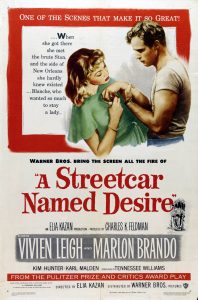
1951: The Film Adaptation of Streetcar is Released
Lorem ipsum dolor sit amet, consectetur adipisicing elit. Quidem, provident.
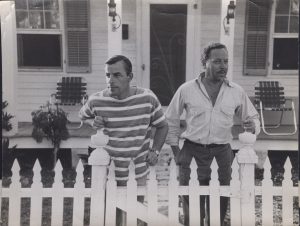
1963: Frank Merlo Dies
Lorem ipsum dolor sit amet, consectetur adipisicing elit. Quidem, provident.
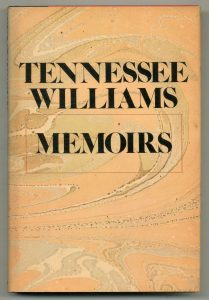
1977: Williams Publishes his Memoirs
Lorem ipsum dolor sit amet, consectetur adipisicing elit. Quidem, provident.
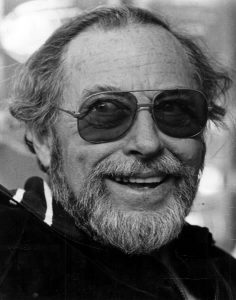
1983: Death
Lorem ipsum dolor sit amet, consectetur adipisicing elit. Quidem, provident.
Works
Plays
The “Big Three”: The Glass Menagerie, A Streetcar Named Desire, and Cat on a Hot Tin Roof
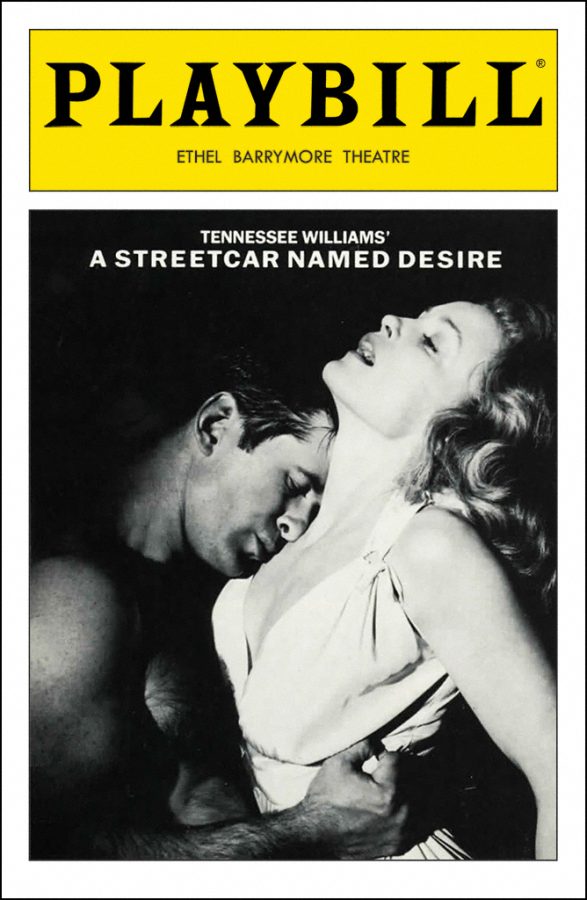
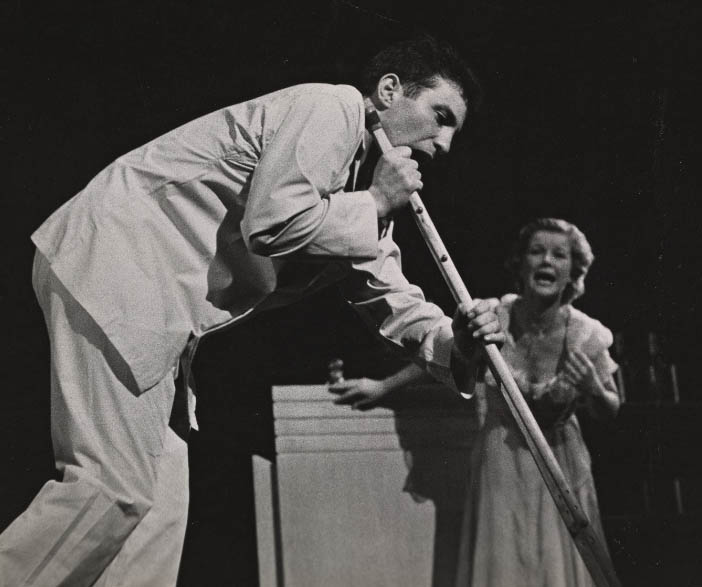
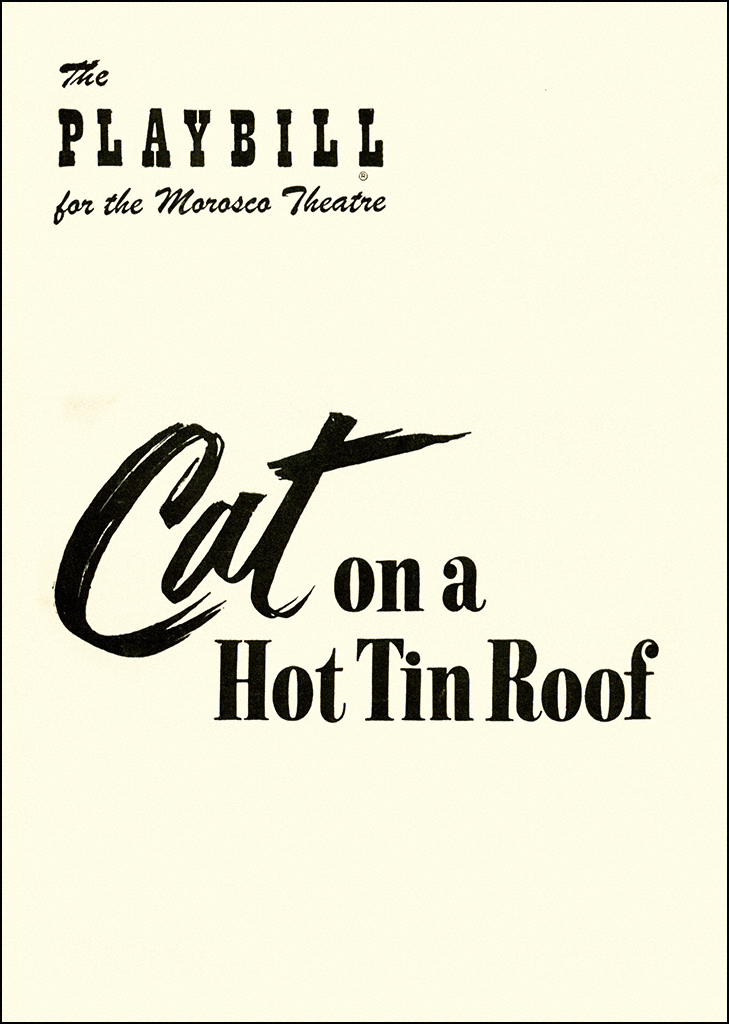
When people think of “a Tennessee Williams play,” they are likely picturing southern family drama, a powerhouse role for a leading lady, and a struggling artist character who is being pressured by the capitalist social order. Although this describes many of Williams’s plays, and also fails to describe many more, there are three plays that loom larger than the rest in the contemporary understand of Williams’s work. The Glass Menagerie (1945), A Streetcar Named Desire (1947), and Cat on a Hot Tin Roof (1955) are likely to be a reader or audience member’s first foray into Willams’s work. The Glass Menagerie was his first major commercial success, while Streetcar and Cat won him his two Pulitzer Prizes for Drama. These three plays secured his legacy as one of the most lauded playwrights of the twentieth century, and their influence can be seen in decades of important works in the American theatre.
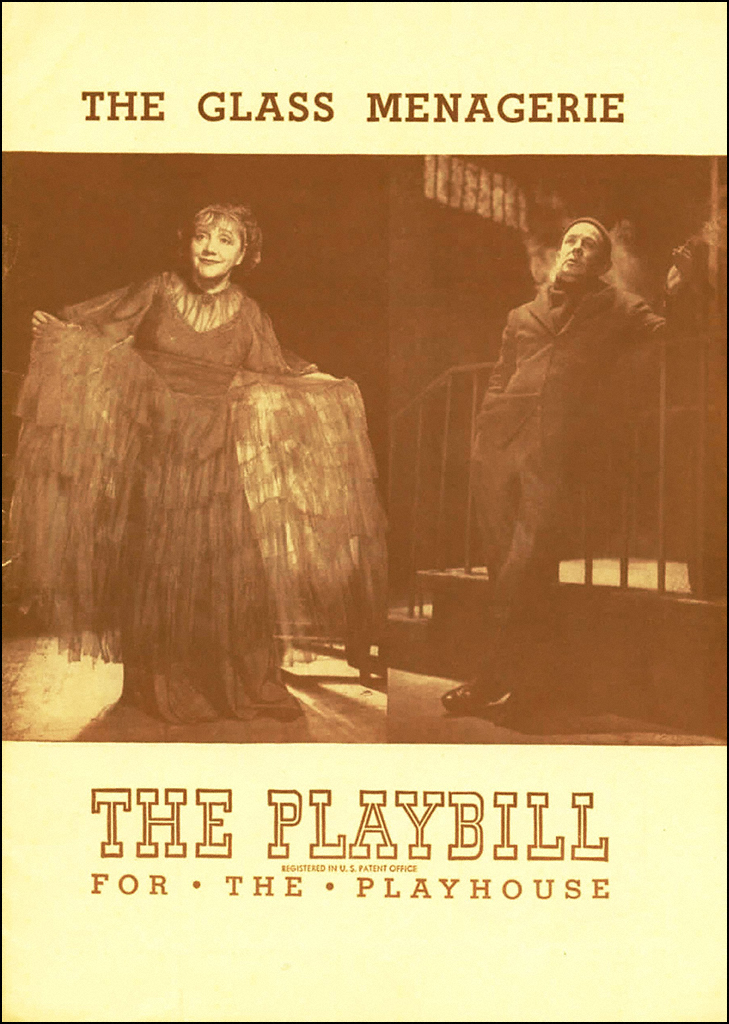
Williams and his agent, Audrey Wood, had hoped that Battle of Angels, a precursor to Orpheus Descending, would be his first Broadway play in 1940. Unfortunately, the play did not connect, and it closed shortly into those tryouts. The Glass Menagerie, a memory play told by a returning merchant marine about his sister and mother in St. Louis, was perhaps an unlikely candidate for his next Broadway attempt. But actor, director, producer Eddie Dowling fell in love with the script, and it was his determination to play Tom that paved the way for Menagerie to be the success we know today.
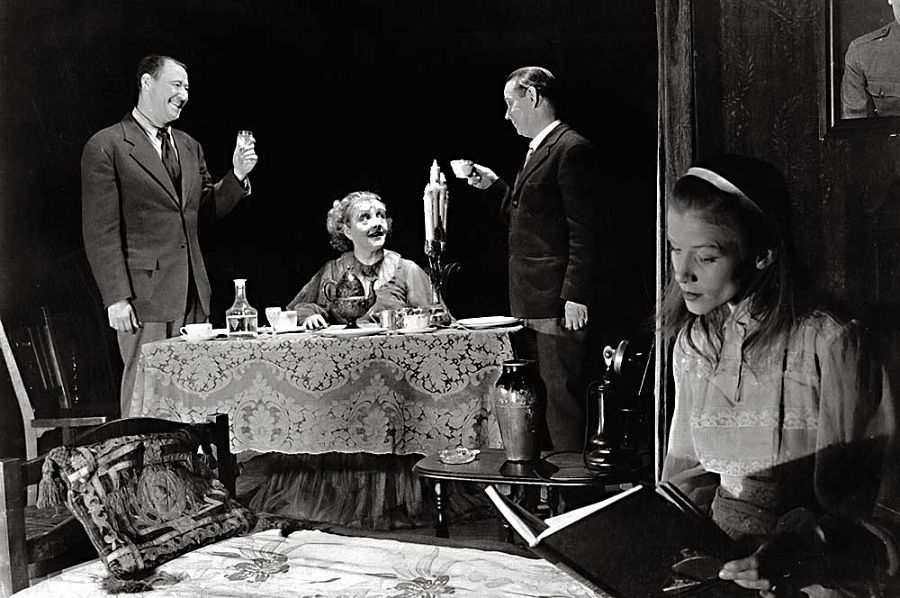
Dowling secured former silent film star Laurette Taylor to play the inimitable Amanda Wingfield, Julie Haydon to play the fragile Laura Wingfied, and Anthony Ross for the Gentleman Caller, Jim O’Connor. He co-directed with Margo Jones, who would go on to be direct Summer and Smoke (1948) and other Williams plays. The production opened in Chicago on December 26, 1944 and then transferred to Broadway’s Playhouse Theatre (which no longer exists today) on March 31, 1945. It played there for almost a year and a half before transferring to the Royale Theatre (now the Bernard B. Jacobs Theatre) for its final month. It closed on August 3, 1946. This production of the play did not use the titles and projections that Williams indicates in his stage direction, and those nonrealistic elements are often left out of major productions. Despite its success and impact, Menagerie lost the Pulitzer Prize to Mary Chase’s Harvey in 1945.
Menagerie is often discussed for its famous fictional representation of Williams’s real-life older sister, Rose Williams (1909-1996), who is one of the earliest recipients of a pre-frontal lobotomy in the United States. The play’s royalties went directly to her care at a long-term medical facility following her lobotomy. And although Menagerie shows the more delicate side of her character through Laura, Rose is also the inspiration for Blanche DuBois in Williams’s next famous play.
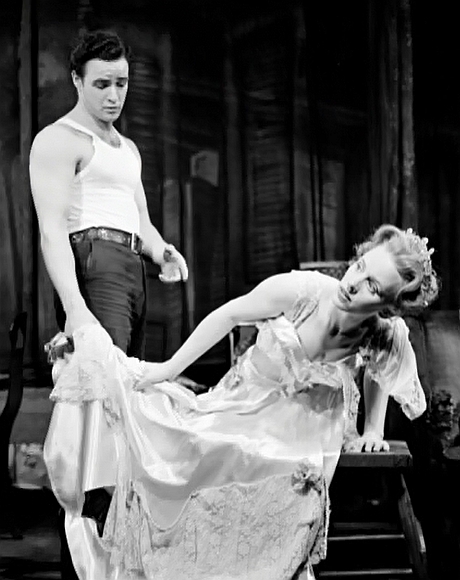
The play won Williams his first Pulitzer Prize for Drama in 1948 and also nabbed a New York Drama Critics’ Circle award for Best Play, while Tandy won a Tony for Best Actress for her performance as Blanche. During the first national tour, Uta Hagen stepped into the role of Blanche, later writing about it in her seminal acting book, Respect for Acting. This introduced generations of actors to the play from an actor’s perspective. Hagen’s framing of the play is also one of the reasons people tend to ignore the anti-realistic elements in the play, such as the repeated theme of the Varsouviana and the gunshot in Blanche’s mind that Williams’s stage directions specify should also be heard on stage, in favor of the play’s realism. Streetcar has also gone on to inspire adaptations and responses ranging from lesbian performance group Split Britches’ Belle Reprieve (1990), in which Stanley is a butch lesbian, to Gregg Ostrin’s Kowalski (2025), which depicts a fictionalized version of the first time Williams and Brando met in 1947.
Bess Rowen (Villanova University)
Poetry
I am very excited with the poems you sent. It seems to me you ARE a poet.
(Letter from New Directions publisher James (Jay) Laughlin to Tennessee Williams, January 20, 1943)
Though Tennessee Williams came to think of himself as first and foremost a writer, the idea of being a poet had a strong, romantic appeal from an early age. He wrote poems when he was in the ninth grade and later idolized both the traveling bard Vachel Lindsay and the Modernist Romantic Hart Crane. When he attended Washington University in Depression-hit St. Louis, Williams became close friends with Clark Mills McBurney and William Jay Smith, two would-be poets with whom he formed the “Literary Factory”: a club that met at Williams’s family home on Pershing Avenue for animated discussions about poetry and politics.
On discovering playwriting and the draw of audience appreciation, Williams continued writing poems but increasingly found that his poetic aspirations could be channeled into the dialogue and stage descriptions of his plays. In the commercially successful phase of his career, the nineteen forties through the fifties, he was widely considered a lyrical dramatist, and, as David Roessel and Nicholas Moschovakis point out, “there is ample reason to look at the whole texture of Williams’s work as that of a seamless web of poetic self-expression.”
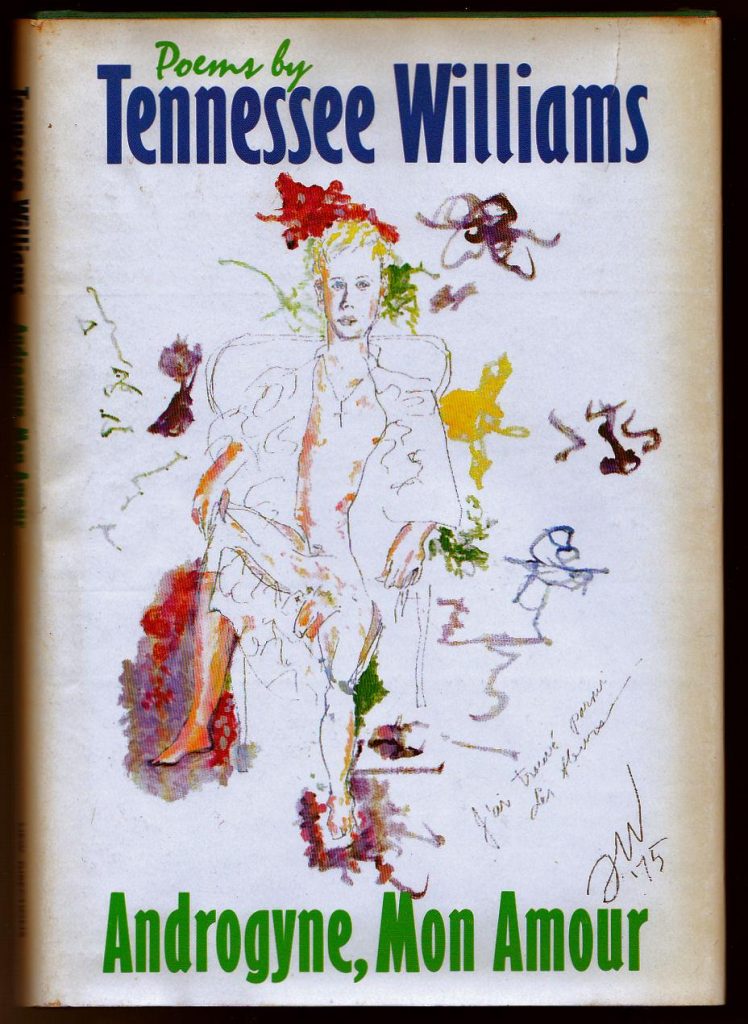
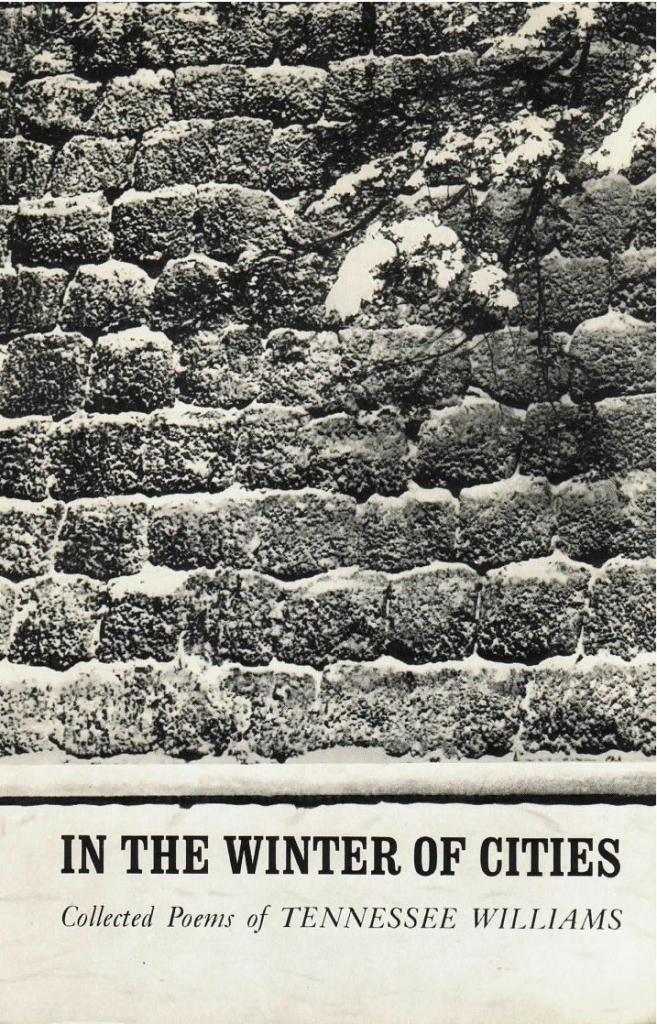
Though twenty-seven of Williams’s earlier poems were selected by his publisher at New Directions, James (Jay) Laughlin, for the 1944 anthology Five Young American Poets, it is for the two collections published in his name, In the Winter of Cities (1956) and Androgyne, Mon Amour (1977), that Williams is best remembered as a poet.
Here we see the partial transition from a lyrical poet, influenced by Sara Teasdale and Edna St. Vincent Millay, to a Modernist, inspired by French Symbolist poetry and the challenging verse forms of Hart Crane. Here, too, we find many of the themes that Williams explored in his other writing: the necessity of flight (“Cried the Fox”); old age (“Shadow Boxes,” “Old Men with Sticks”); the fleeting and uncertain nature of love (“Across the Space”); homoeroticism (“The Interior of the Pocket,” “The Siege”); the madness inherent in creativity (“The Dangerous Painters”); and the impact of death (“Photograph and Pearls”).
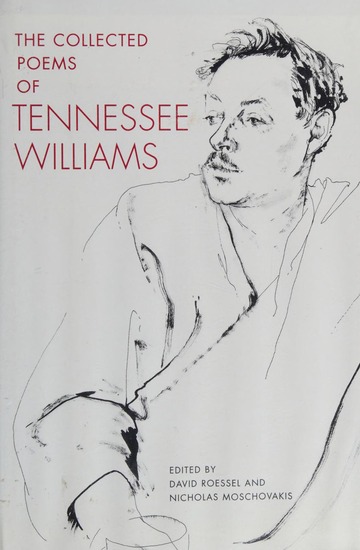
The Collected Poems of Tennessee Williams (2002), edited by David Roessel and Nicholas Moschovakis, adds Williams’s early poems (both his juvenilia and those published under the name Thomas Lanier Williams); those included in his fiction, drama, and the film treatments of his plays; and those previously uncollected or published posthumously to the two collections already mentioned. Of particular note here are Nonno’s poem from The Night of the Iguana (1961), “How Calmly Does the Orange Branch,” a poignant meditation on time passing and the fortitude needed to contemplate decay and death, and “I Think the Strange, The Crazed, The Queer,” a plea for respite on behalf of the world’s outsiders included in both The Mutilated (1966) and And Tell Sad Stories of the Deaths of Queens … (1957).
The ongoing unearthing of individual poems from the various Williams archives in the US throws further light on the writer’s methods of composition and the ways in which he continued to employ poetry as a genre to explore moods and key moments in his life. Notable recent examples include “Kicks,” which imagines Blanche DuBois and Stanley Kowalski (from A Streetcar Named Desire) in court in the context of the lambasting Williams was receiving from theater critics in the seventies; and “The Final Day of Your Life,” a poem that revisits the death of Williams’s partner, Frank Merlo, and that adds to earlier reflections on their uneven and troubled relationship: “Little Horse,” “Covenant,” and “A Separate Poem.”
Michael Hooper
Further Reading
Adler, Thomas P. “Tennessee Williams’s Poetry: Intertext and Metatext.” Tennessee Williams Annual Review, vol. 1, 1998, pp. 63-72.
Conlon, Christopher. “‘Fox-Teeth in Your Heart’”: Sexual Self-Portraiture in the Poetry of Tennessee Williams.” Tennessee Williams Annual Review, vol. 4, 2001, pp. 59-69.
Tischler, Nancy M. “Tennessee Williams: Vagabond Poet.” Tennessee Williams Annual Review, vol. 1, 1998, pp. 73-79.
Prose Fiction
The Short Stories
Tennessee Williams was a prolific and accomplished prose writer. He began writing short stories at school and achieved some commercial success— with “The Vengeance of Nitocris” (1928), for example, which was accepted by Weird Tales—before he began writing plays. Even after becoming an acclaimed playwright, Williams continued to write and experiment with short stories, using the form to develop ideas for his drama, trying out different plots and characters in the process.
Just four collections were published during the author’s lifetime: One Arm and Other Stories (1948); Hard Candy: A Book of Stories (1954); The Knightly Quest: A Novella and Four Short Stories (1966); and Eight Mortal Ladies Possessed: A Book of Stories (1974). In recent years, however, there has been a concerted effort to make a greater number of previously unpublished stories available. The bulk of these are from Williams’s apprentice years: the 1930s when he was still living with his family in St. Louis. Early Stories by Tennessee Williams (2025), edited by Tom Mitchell, sheds further light on Williams’s sister (“Apt. F, 3rd Flo. So.”) and grandfather (“Every Friday Nite Is Kiddies Nite”) but also highlights the social deprivation in the Depression-hit city and takes us into other parts of Missouri, notably the Ozarks where Williams spent some of his summers.
Like many of Williams’s plays, the short fiction tackles themes of loneliness, desire, violence, and death; and it tends to make the character of the fugitive a prominent and sympathetic figure. Memory also resurfaces in this genre, its elusiveness and unreliability creating moments that are almost unbearably poignant, even in apprentice works like “Something by Tolstoi” (1930-31) and “Sand” (1936). Some stories, like “The Field of Blue Children” (1939), “Portrait of a Girl in Glass” (1948), “The Resemblance between a Violin Case and a Coffin” (1950), “The Angel in the Alcove” (1948), and “Two on a Party” (1954), are heavily autobiographical; others, like “Grand” (1964), seem to be pure memoir. Indeed, Gore Vidal, who wrote the introduction to the posthumously published Collected Stories (1985), claimed that Williams’s short fiction was his “true memoir.”
Several of the stories explore homoerotic themes with a directness that was not possible in Williams’s plays. “One Arm” (1948), “The Mysteries of the Joy Rio” (and its companion piece, “Hard Candy,” both 1954), and “Desire and the Black Masseur” (1948) present gay male experiences as necessarily secretive and discreet but also as highly charged, even sado-masochistic.
Williams himself acknowledged that these stories bordered on the indecent and gave instructions that they be made available only on special request. Some, like “Desire and the Black Masseur” and “Hard Candy,” employ intrusive narrators that draw attention to salacious detail, lampooning in the process both censorship and homophobia.
The Novels
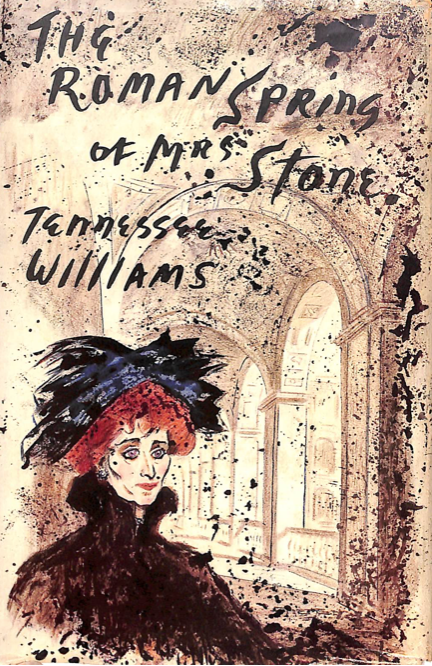
In addition to his novella, The Knightly Quest, a zany narrative interweaving gay themes with Williams’s interest in science fiction and his abiding concerns about a surveillance society, Williams wrote just two full-length novels: The Roman Spring of Mrs. Stone (1950) and Moise and the World of Reason (1975). The former, set in the Italian capital, one of the writer’s favorite cities, follows the fortunes of Karen Stone, a former actress who has escaped the shame of her last theatrical appearance in Romeo and Juliet and ultimately, she hopes, the public scrutiny of her aging looks. In Rome, she becomes embroiled in a world of sexual politics, her relationship with the gigolo, Paulo, being typical of those adopted by mature American women in that it is transactional and governed by the preservation of dignity.
Like Williams’s theatrical protagonists, Karen Stone is only too aware of her vulnerability, her devaluation in a society obsessed with appearances, and tries to stem the drift of her middle years. Ultimately, The Spring of Mrs. Stone is a novel that balances Williams’s compassion for women with his love of Latin beauty and sexual openness.
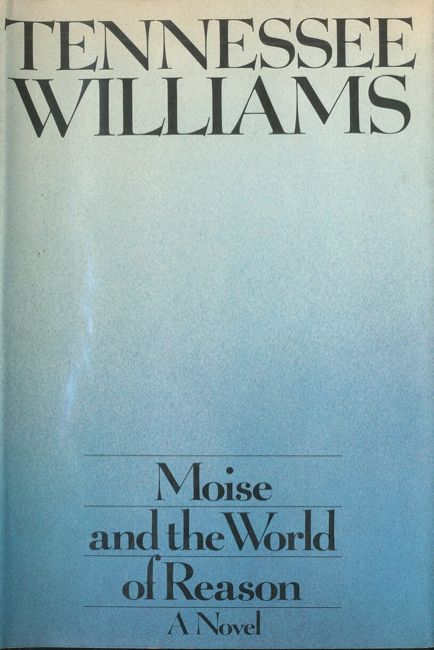
Moise and the World of Reason, written at approximately the same time as Williams’s Memoirs, in many ways echoes the author’s dislocated position in the seventies after a decade of self-abuse and critical rejection. Its narrator lives with his lover, Charlie, in a warehouse and attends a party hosted by their friend, Moise, a painter who rarely completes her canvases. Moise wishes to make a public announcement about her retirement from a world of reason—an abdication that also parallels Williams’s creative direction and the way in which he was increasingly viewed by critics. As well, the world of reason seems to connote sterility as opposed to feeling and intimacy, and it is no surprise that, in the novel’s highly suggestive denouement, both Moise and the narrator are preparing themselves for sexual encounters with camera men documenting the announcement.
Historically, Williams’s prose fiction has been overlooked, his theater having commanded far more attention. In recent years, though, the short stories in particular have attracted further interest and more diverse critical approaches, ranging from queer and disability studies to Kristevan theories of abjection and jouissance.
Michael Hooper
Further Reading
Maruéjouls-Koch, Sophie, and Laura Torres Zúñiga, eds. “Revisiting Tennessee Williams’s ‘Weird Tales.’” Journal of the Short Story in English 86 (Spring 2026).
Saddik, Annette. “The (Un)Represented Fragmentation of the Body in Tennessee Williams’s ‘Desire and the Black Masseur’ and Suddenly Last Summer.” Modern Drama 41.3 (1998): 347-354.
Savran, David. Communists, Cowboys, and Queers: The Politics of Masculinity in the Work of Arthur Miller and Tennessee Williams. Minneapolis: University of Minnesota Press, 1992.
Schiavi, Michael R. “The Hungry Women of Tennessee Williams’s Fiction.” Tennessee Williams: A Casebook. Ed. Robert F. Gross. London: Routledge, 2002. 107-120.
Torres Zúñiga, Laura. “Autofiction and Jouissance in Tennessee Williams’s ‘Ten Minute Stop.’” Tennessee Williams Annual Review 14 (2014): 97-110.
Vannatta, Dennis. Tennessee Williams: A Study of the Short Fiction. Boston: Twayne, 1988.
Unlike The Roman Spring of Mrs. Stone, Moise and the World of Reason is an avant-garde novel with a highly self-conscious narrator, deliberately incomplete sentences, and, anticipating the postmodern novels of Paul Auster and others, even a character named Tennessee Williams. As New Directions, Williams’s publisher, proclaims, it is an “erotic, sensual, and comic novel that was a generation ahead of its time.”
Adaptation and Critical Reception
As noted earlier, Williams’s stories complement his plays. They explore similar themes, plots, and characters, and some may appear to be templates for, or re-imaginings of, both full-length and one-act plays: “Twenty-seven Wagons Full of Cotton” (1936), “Portrait of a Girl in Glass,” “The Night of the Iguana” (1948), “Three Players of a Summer Game” (1952), “Man Bring This Up Road” (1959), and “The Kingdom of Earth” (1954), for example. Williams adapted “One Arm” into a screenplay with the same title but the film was never produced; it has, however, in turn been adapted into a stage play by Moisés Kaufman. In 2015, Michael Wilson directed Desire, a group of six plays based on Williams’s short stories and written by, among others, John Guare and Beth Henley.